
Hyundai Suspension and Steering Parts Guide for Daily-Driver Control, Ride Height, and Repair Value
Hyundai owners usually want repairs that are practical, affordable, and reliable for everyday driving. When steering feels loose, ride height looks uneven, or the vehicle starts clunking over bumps, the suspension and steering systems should be checked together. OEM Hyundai parts can help restore the original fit and handling feel while supporting warranty-safe maintenance and long-term savings compared with dealership repair pricing.
Hyundai steering and suspension symptoms can show up during normal commuting.
Daily driving exposes your Hyundai to potholes, speed bumps, road salt, heavy cargo, and constant stop-and-go use. Over time, those conditions can lead to wandering steering, pulling to one side, uneven tire wear, clunks, body roll, or sagging ride height. These issues may start small, but ignoring them can shorten tire life, make the vehicle less comfortable, and turn a simple repair into a more expensive visit later.
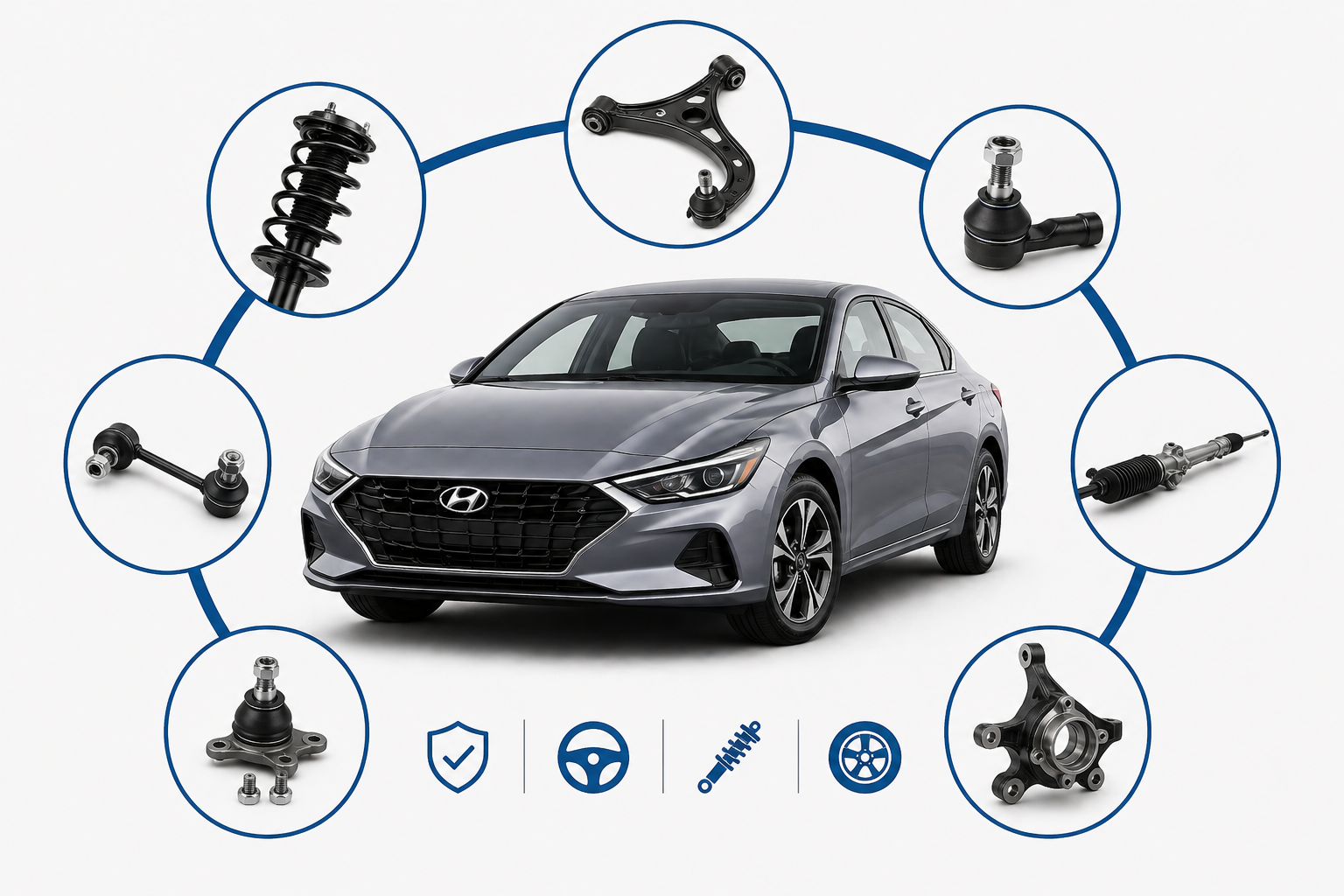
Here is why these systems affect reliability, cost, and everyday usability.
Suspension parts support the vehicle and help the tires stay planted. Steering parts turn driver input into controlled wheel movement. Because the systems work together, one worn or incorrect part can affect alignment, ride height, tire wear, and steering feel. A weak spring can change stance, worn linkage can make the vehicle wander, and loose hardware can cause noise that gets worse over time.
For budget-conscious Hyundai owners, OEM parts are a smart middle ground: they are made to match the vehicle’s original geometry, mounting points, and fitment needs. That can reduce installation problems, help protect warranty-safe repairs, and avoid the cost of replacing a poor-fitting aftermarket part twice.
A step-by-step way to diagnose and plan the repair before ordering parts.
- Start with the symptoms. Note when the issue happens: turning, braking, hitting bumps, carrying cargo, or driving at highway speed.
- Check tires first. Uneven pressure, worn tread, or mismatched tires can feel like a steering or suspension problem.
- Look for visible wear. Inspect for sagging ride height, cracked bushings, loose hardware, corrosion, leaking components, or damaged mounting points.
- Confirm fitment details. Match the exact year, model, trim, drivetrain, and body style before buying parts.
- Replace related parts when needed. If one side is worn, inspect the opposite side so the repair stays balanced.
- Plan for alignment. After steering or suspension work, an alignment helps the Hyundai track straight and protects tire life.
Recommended OEM Hyundai parts for practical repairs and upgrades.
Use OEM parts when fitment, warranty-safe maintenance, and long-term value matter. The right parts depend on your Hyundai model and the repair goal, but common categories include Hyundai strut bars for added chassis support, Hyundai lift kit parts for compatible ride-height work, Hyundai pitman and idler arms for steering linkage support on equipped models, and Hyundai leaf springs where load support and stance need attention.
These parts should not be used to hide a worn system. A strut bar can support a more connected feel, but it works best when the rest of the suspension is healthy. Lift components may change alignment angles, so they should be installed with fitment and post-repair alignment in mind. Leaf springs and steering linkage parts should be selected by exact Hyundai application.
Other Hyundai links to help you shop the right section.
For Hyundai suspension and steering repairs, start with these OEM-focused categories: Hyundai strut bars, Hyundai lift kit parts, Hyundai pitman and idler arms, and Hyundai leaf springs. These category pages make it easier to compare parts by repair type while staying focused on components designed for Hyundai fitment.
Frequently Asked Questions
Are OEM Hyundai suspension and steering parts worth it?
Yes. OEM parts are built around Hyundai fitment requirements, which can help with installation, predictable handling, warranty-safe repairs, and long-term value.
Can suspension problems increase repair costs?
Yes. Worn suspension or steering parts can contribute to uneven tire wear, poor alignment, noise, and handling problems. Fixing the issue early can help avoid larger costs.
Do Hyundai lift kit parts require an alignment?
Yes. Ride-height changes can affect alignment and steering feel, so an alignment should be planned after lift-related work.
When should Hyundai leaf springs be inspected?
Inspect them when the vehicle sags, leans, carries loads poorly, or shows visible cracks, corrosion, or worn bushings.
What do worn pitman or idler arms feel like?
On equipped vehicles, worn parts can cause loose steering, wandering, clunks, delayed response, or uneven tire wear.